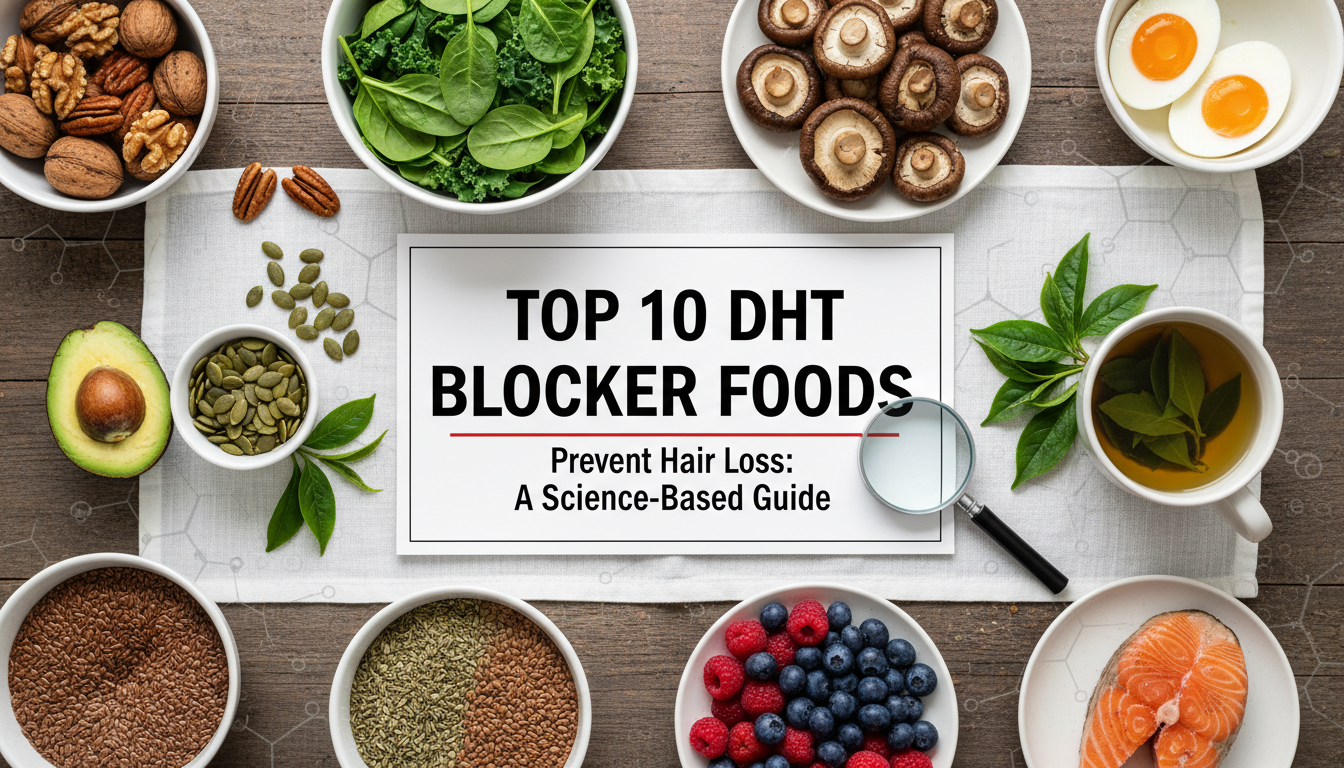
Hair Care loss can be a frustrating experience, often leading many to search for solutions ranging from expensive clinical treatments to various topical serums. However, one of the most effective and sustainable ways to support hair health is from the inside out. At the heart of most genetic hair thinning—specifically androgenetic alopecia—is a hormone called Dihydrotestosterone (DHT).
While DHT is a naturally occurring androgen, an oversensitivity to it can cause hair follicles to shrink, a process known as miniaturization. Fortunately, nature provides several compounds found in everyday foods that may help inhibit the enzyme responsible for creating DHT, potentially slowing down hair loss and promoting thicker growth.
The Skincare Science of DHT and Hair Care Loss
To understand how food helps, we must look at the enzyme 5-alpha-reductase. This enzyme is responsible for converting testosterone into DHT. When DHT attaches to receptors in the scalp, it shortens the growth phase (anagen) of the hair cycle. Over time, the hair produced is thinner and shorter until the follicle stops producing hair altogether.
DHT-blocking foods typically contain specific nutrients—such as zinc, lycopene, and epigallocatechin gallate (EGCG)—that naturally interfere with the 5-alpha-reductase enzyme or prevent DHT from binding to your follicles.
Top 10 Foods That Naturally Block DHT
1. Green Tea
Green tea is one of the most potent natural DHT blockers available. It is rich in a plant compound called epigallocatechin gallate (EGCG). Research suggests that EGCG can protect hair follicles by inhibiting the activity of 5-alpha-reductase. Additionally, the antioxidants in green tea help reduce scalp inflammation, creating a healthier environment for hair growth.
2. Pumpkin Seeds
Pumpkin seeds are a nutritional powerhouse for hair. They contain a unique amino acid called cucurbitacin and are rich in phytosterols. Studies have shown that pumpkin seed oil can significantly increase hair count in men with thinning hair by blocking the production of DHT without the hormonal side effects often associated with pharmaceutical blockers.
3. Edamame and Soy Products
Soybeans contain a group of compounds called isoflavones, specifically daidzein. When digested, certain gut bacteria convert daidzein into equol. Equol has the unique ability to bind directly to DHT, neutralizing its effects on the hair follicle without affecting testosterone levels.
4. Onions (and other Quercetin-rich foods)
Onions are high in quercetin, a powerful antioxidant. Quercetin has been shown in clinical studies to inhibit the 5-alpha-reductase enzyme. While many people use onion juice topically, incorporating onions, shallots, and scallions into your diet provides a systemic boost of this protective flavonoid.
5. Turmeric
The active compound in turmeric, curcumin, is well-known for its anti-inflammatory properties. However, emerging research indicates that curcumin can also act as a potent inhibitor of 5-alpha-reductase. By reducing both DHT levels and scalp inflammation, turmeric offers a dual-action approach to preventing hair thinning.
6. Spinach and Leafy Greens
While spinach may not block DHT directly as aggressively as green tea, it is vital for the hair’s resistance to DHT. It is loaded with iron and vitamin C, which improve oxygen delivery to the follicles. It also contains phytosterols that may help balance hormone levels in the scalp.
7. Walnuts
Walnuts contain L-lysine and walnuts are one of the few nuts that contain significant amounts of alpha-linolenic acid (ALA). ALA acts as a natural 5-alpha-reductase inhibitor. Furthermore, walnuts provide biotin and vitamin E, which strengthen the hair shaft against breakage.
8. Carrots
Rich in beta-carotene (which the body converts to Vitamin A), carrots are essential for sebum production. A healthy level of sebum protects the scalp from oxidative stress. Carrots also contain lycopene, which has been linked to lower levels of DHT in the body.
9. Oysters and Zinc-Rich Foods
Zinc is a mineral that plays a crucial role in the body’s enzymatic processes, including those that regulate hormones. A deficiency in zinc is frequently linked to hair loss. Oysters, hemp seeds, and lentils are excellent sources of zinc, which helps keep the 5-alpha-reductase enzyme in check.
10. Tomatoes
Tomatoes are the primary dietary source of lycopene. This carotenoid does more than just protect your skin from UV rays; it also helps regulate the body’s sensitivity to androgens. By consuming cooked tomatoes (which increases lycopene bioavailability), you can help modulate the DHT response in your scalp.
Summary of Key Nutrients
| Food Item | Active Compound | Primary Benefit |
|---|---|---|
| Green Tea | EGCG | Inhibits 5-alpha-reductase |
| Pumpkin Seeds | Phytosterols | Reduces DHT production |
| Edamame | Isoflavones/Equol | Neutralizes existing DHT |
| Turmeric | Curcumin | Blocks enzyme and reduces inflammation |
| Tomatoes | Lycopene | Modulates androgen receptors |
Pros and Cons of Using Food as a DHT Blocker
Pros
- Safety: Unlike pharmaceutical DHT blockers, foods do not typically cause systemic hormonal side effects such as decreased libido.
- Overall Health: The foods listed above are nutrient-dense and provide benefits for heart health, skin, and immunity.
- Cost-Effective: Incorporating these items into your weekly grocery list is often cheaper than specialized supplements.
Cons
- Lower Potency: Dietary changes may not be as aggressive as medical treatments like Finasteride for advanced hair loss.
- Time: It can take 3 to 6 months of consistent dietary habits to see a visible change in hair quality.
- Individual Variation: Genetics play a massive role; diet alone may not be enough if you are highly sensitive to DHT.
Actionable Tips for Success
Simply eating a pumpkin seed once a week won’t halt hair loss. To see results, you should adopt a “hair-healthy” lifestyle. Focus on the following:
- Consistency: Aim to include at least two of these DHT-blocking foods in your daily meals.
- Scalp Health: Combine a DHT-blocking diet with scalp massages to improve blood circulation, ensuring the nutrients actually reach the follicles.
- Reduce Stress: High cortisol levels can accelerate hair thinning, potentially negating the benefits of your diet.
Frequently Asked Questions
How long does it take to see results from a DHT-blocking diet?
Hair Care grows in cycles, and the “resting” phase can last several months. Most people notice an improvement in hair texture and a reduction in shedding after 3 to 6 months of consistent dietary changes.
Can women use DHT-blocking foods?
Yes. While DHT is often discussed in the context of male pattern baldness, it is also a primary culprit in female pattern hair loss (androgenetic alopecia). These foods are safe and beneficial for women.
Are these foods enough to regrow hair on a bald spot?
If a hair follicle has completely “died” and scarred over, food alone is unlikely to revive it. However, these foods are excellent for thickening existing hair and preventing further thinning in areas that are just starting to recede.
Is it better to take supplements or eat the whole foods?
Whole foods are generally preferred because they contain a complex matrix of fiber, vitamins, and minerals that help with the absorption of the active compounds. However, supplements like pumpkin seed oil or green tea extract can be helpful for those who cannot get enough through diet alone.
—
Topic: DHT blocker foods to prevent hair loss
Tags: #Top #DHT #Blocker #Foods #Prevent #Hair Care #Loss #Skincare ScienceBased #Guide